


Tzotzil Mission in Chiapas
by Irene Gonzalez Hernandez
This past Holy Week I had the opportunity to visit some of the noblest and kindest people I've ever met, the Tzotzil, in one of the poorest regions of Mexico. Chiapas is consistently ranked as the poorest state in Mexico, with the highest poverty rates (around 76% in recent years) and the lowest per capita income. The community I visited was San Jose Buenavista, 45 minutes south of San Cristobal de las Casas.
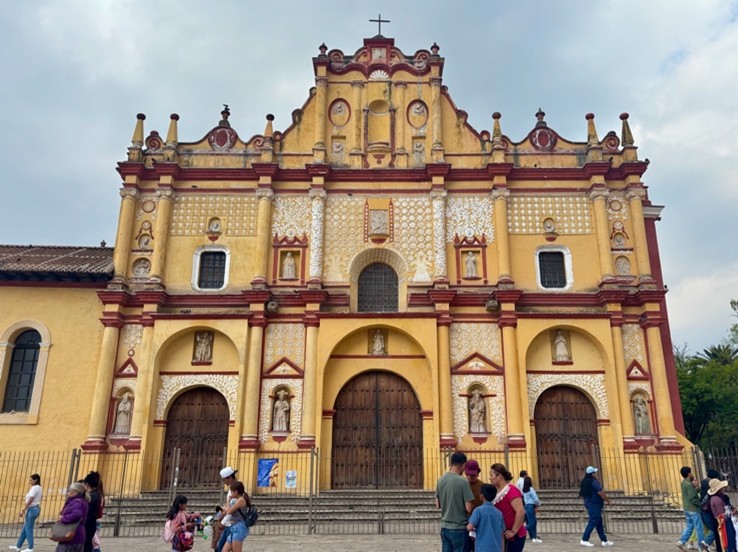
The Diocese of San Cristobal de las Casas was created on March 19, 1539, and in 1545, Friar Bartolome de Las Casas arrived in Chiapas and became its first bishop. He was officially appointed "Protector of the Indians". The region has always been subject to political pressure and the voracious exploitation of both its natural resources and its indigenous population. It is the fifth oldest diocese on the continent.
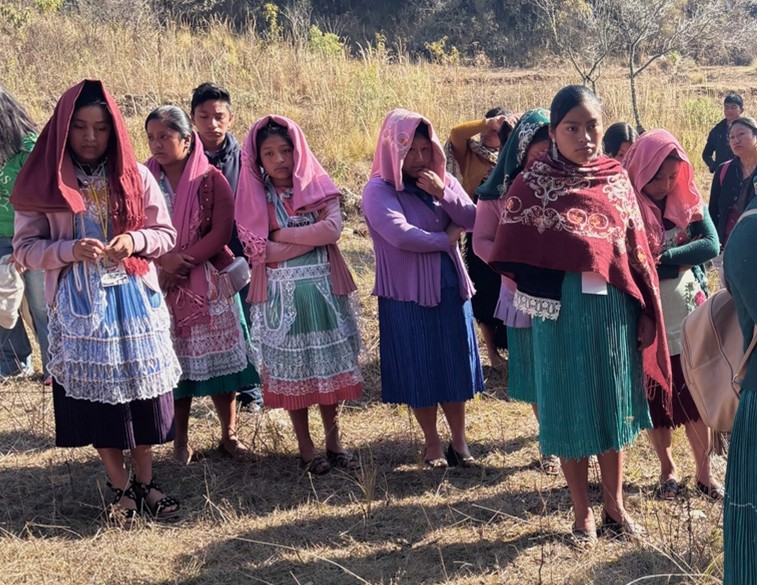
The Tzotzil are an indigenous Maya people living in the central highlands of Chiapas, Mexico. They are one of the largest indigenous groups in the country, with a population over 550,000. Their Tzotzil language belongs to the Maya family. It is a tonal oral language that was first written in the Latin alphabet in the mid-16th century, following the arrival of Spanish Dominican friars in Chiapas, Mexico. In the region, very few speakers are somewhat bilingual in Spanish, but many are monolingual Tzotzil speakers.
In 2003, Bishop Felipe Arizmendi established the first Sunday Mass in Tzotzil at the San Cristobal de las Casas Cathedral for the thousands of indigenous people of the Chiapas Highlands. In 2013, Pope Francis approved the translation of Mass and sacrament prayers into the Tzotzil language for the Diocese of San Cristobal de las Casas and the Archdiocese of Tuxtla Gutierrez in Chiapas, Mexico. These approved texts enable indigenous communities to receive sacraments like baptism and marriage in their native language, following eight years of translation work.
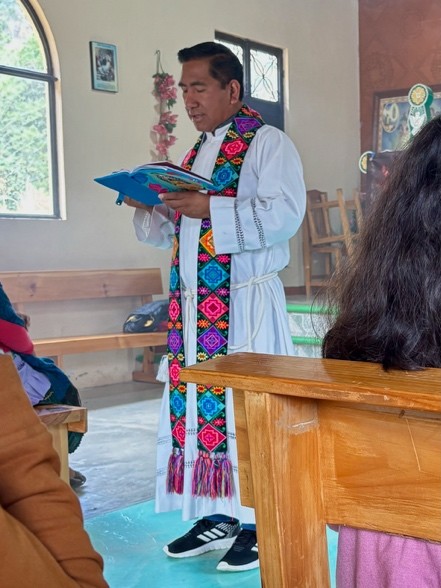
In June 2024, the Mexican Episcopal Conference (CEM) officially approved the translation of the Bible into the Tzotzil language of San Juan Chamula, marking a milestone for the Catholic Church and the indigenous peoples of Chiapas.
How did I end up in such a remote place?
The Dominican Sisters of the Presentation have a little house in Candelaria, a small town one hour east of San Cristobal. From there, they help San Juan Diego Parish in San Cristobal de las Casas with catechetical formation to indigenous ministers that do speak Spanish and that want to bring the Catholic faith to their communities. It is a gigantic effort for only one bilingual diocesan priest and three sisters to accompany 70 plus communities or villages.
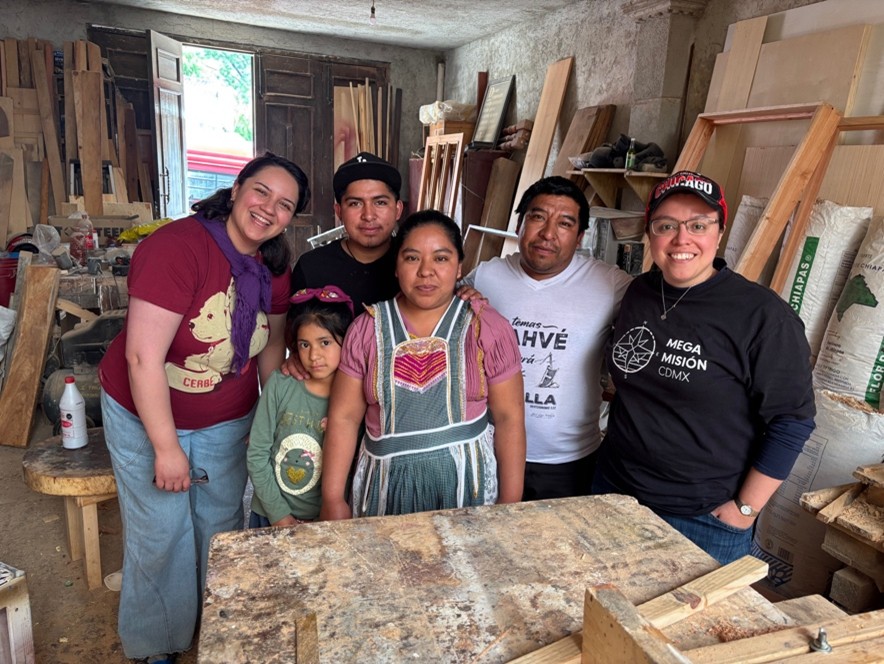
Since I am a Lay Dominican that works closely with the sisters in Mexico City, I was invited to go on mission to the tiny village of San Jose Buenavista.
The Hernandez Ruiz family were our hosts. The family consists of Mr. Adolfo, his wife Felipa, their two kids (20 year old Omar, and 18 year old Carina), Adolfo's sister Mari and her 8 year old daughter Reyna. They were absolutely kind to let us sleep in their beds and they all slept on the floor in another room of their house. The kitchen was the place where we spent most of the time with them, since this is where fraternal gathering among family members and other visitors takes place. The community has electricity but no running water. The water they use for drinking, cooking and washing comes from the rain they collect. Their kitchens have a wood stove where they make their corn tortillas. Women usually walk 2 hours to collect some tree branches to make fire in their stoves. There is no signal from major cell phone providers.
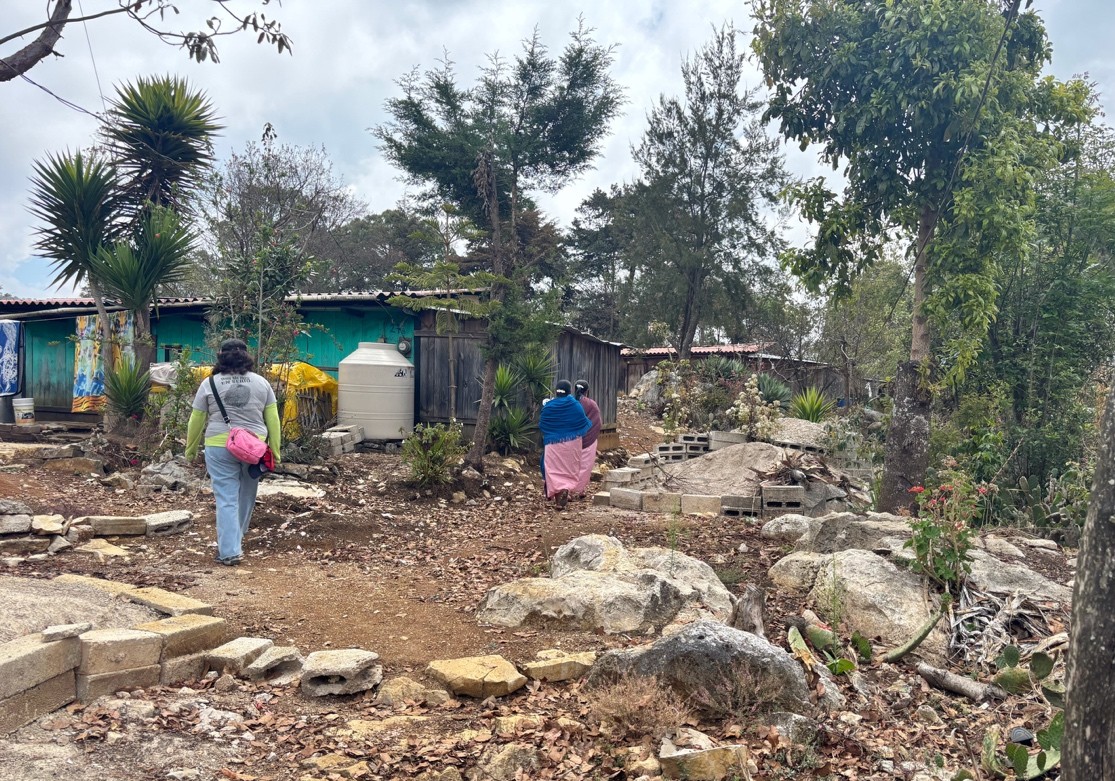
Here, most families rely on subsistence agriculture, growing corn, beans, and squash. Some families have some chickens, too. A few men of the community are masons, and Mr. Adolfo is the only carpenter. Like many of San Jose's inhabitants, Mr. Adolfo, Mari and Omar commute to work in San Cristobal which is the nearest city. Life in the community revolves around communal governance and strong kinship networks. There is one elementary school, but it only teaches in Spanish.
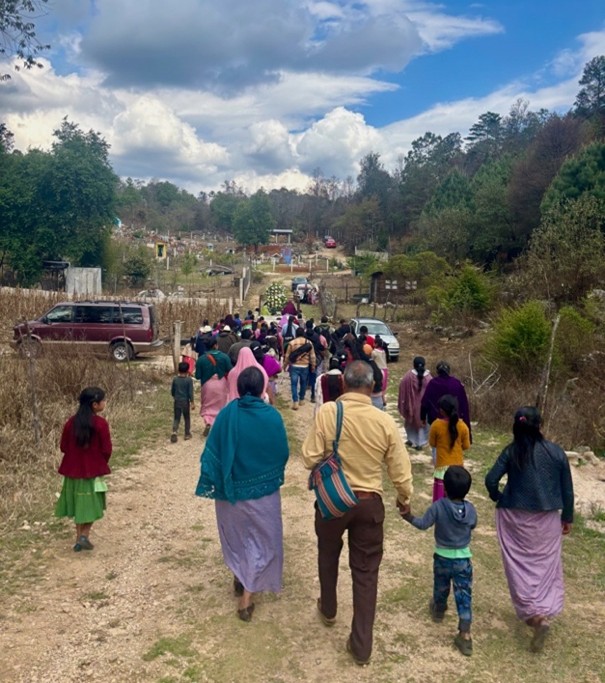
The missionary work we did consisted mainly in visiting the families, getting to know them, praying with them for their intentions, conduct a census of the sacramental needs, teach catechesis for kids, teenagers and adults, and celebrating the liturgy for Holy Week. Little did we know that God would also entrust us with the very special task of guiding the funeral rites of a little handicapped girl that passed away the day after we visited her house and prayed with her. We held the vigil service at the girl's house and prayed the rosary, we did the funeral liturgy, and the rite of committal at the cemetery.
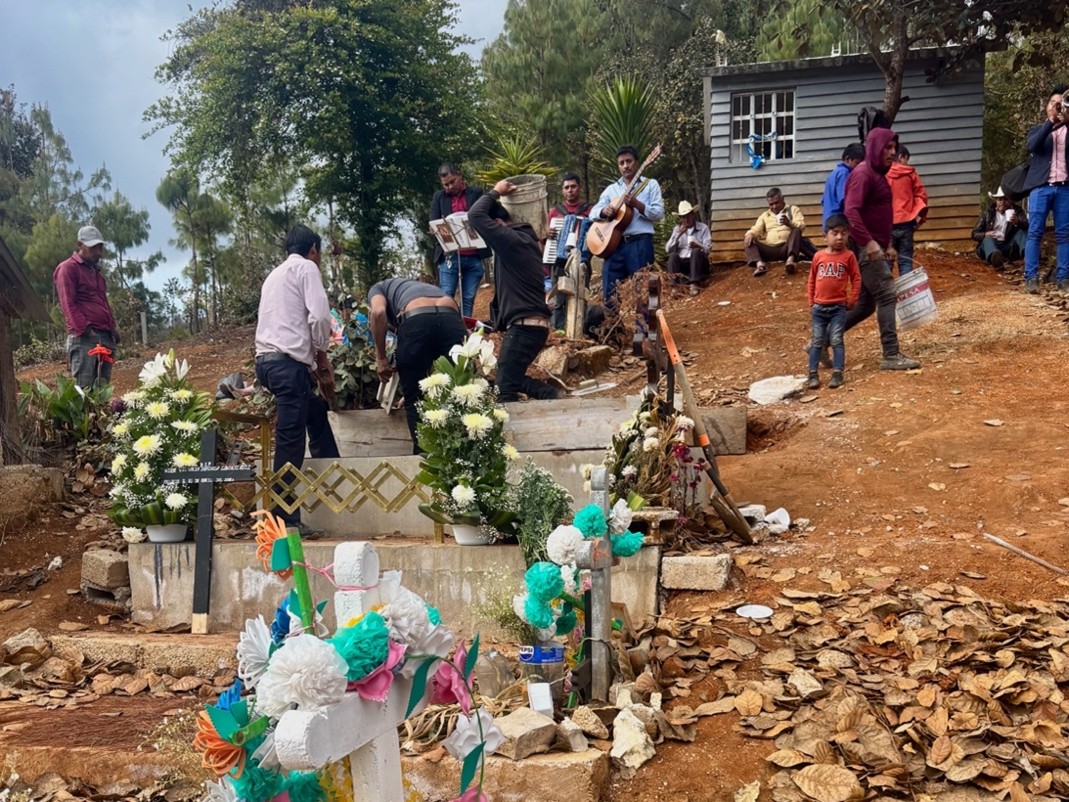
When a person in the village dies, all the community unites and helps the family of the deceased. They all help with the expenses and in every possible way. It was very moving to see this kind of solidarity unfold. All the women help cooking a meal to accompany the wake. The musicians gather and play songs for mourning. The person who owns a large truck helps moving the coffin and floral decorations. All the family and friends process behind the coffin all the way to the cemetery. The masons help prepare the tomb. And everything happens in a simple yet solemn atmosphere in the most natural way. These Tzotzil people are so close to nature, that death is as natural as life and life goes on. Of course, we Catholics believe that Jesus Christ conquered death by his Resurrection, granted us salvation, and that everlasting life awaits us in heaven with our loved ones.
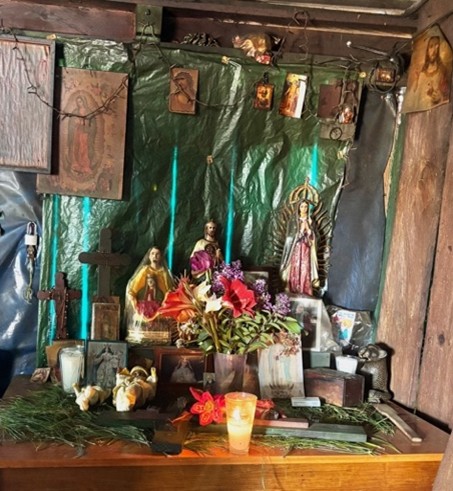
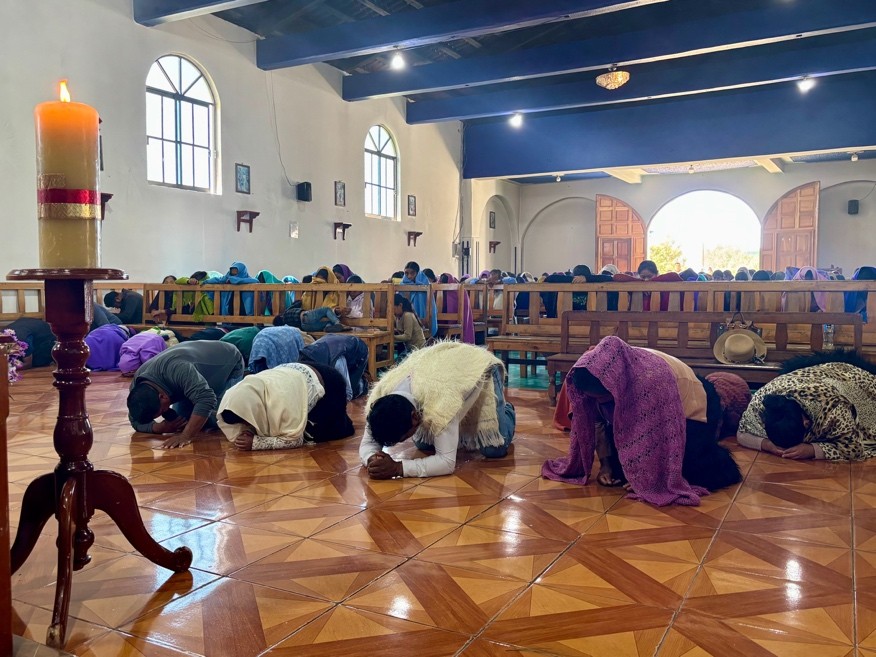
The elders among the Tzotzil still play a very important role in the liturgy. They are called "los principales" and they are in charge of burning incense during ceremonies with a traditional clay copal incense burner. One fascinating element of the Tzotzil worship is their deep compunction during prayer. Just before the penitential act during Mass, they all pray at the same time in a loud voice in spontaneous personal prayer and shedding tears. The elders are also the ones starting and ending this prayer. It is very moving to see these faithful people crying out to God with all their hearts. During the Way of the Cross, each time Jesus falls they all fall on their knees in those stations despite the rough conditions of the floor. In each of the humble homes we visited there was always a small altar with at least a crucifix and the image of Our Lady of Guadalupe, with some flowers and a lit votive candle.
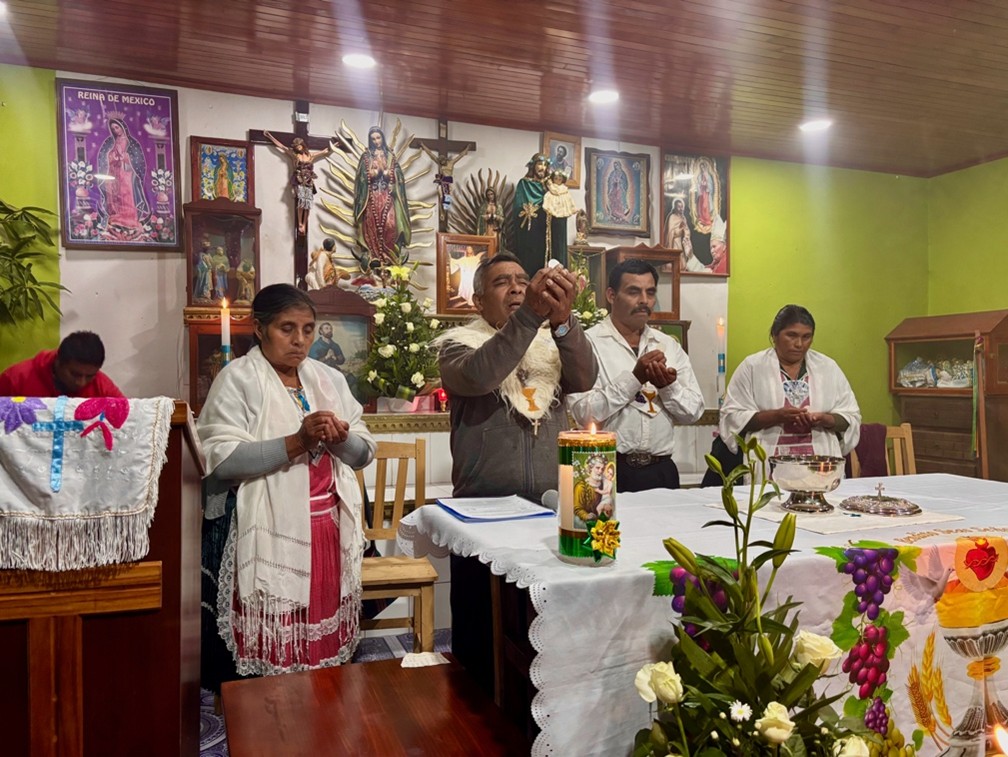
I was absolutely blessed to have spent Holy Week with such amazingly generous and kind souls that reminded me to appreciate the little things that we take for granted such as sunshine, rain, and the love of our family. In such an underprivileged condition, suffering from extreme poverty, mocked for their indigenous culture, abandoned by the government, and suffering from many illnesses, the Tzotzil are for me the people of the Beatitudes, the Anawim, the little ones, the humble, lowly, broken, marginalized and faithful people who depend solely on God. Thanks be to God for such a blessing.
Our Father in Tzotzil
jTotik ta vinajelich' biluk ta muk' ach'ul bi;ak'o taluk alekilalak'o xk'ot ta paselli k'usi cha k'anta balumil jech k'ucha'al ta vinajel. Ak'bunkutik tana li jve'el kutikta jujun k'ak'al. Ch'ayuk ta avo'onton li jmulkutikjech k'ucha'al ta jch'ay ta ko'ntonkutikli buch'u oy smul ku'unkutike. Mu me xavak' xiyalkutikta sujel yu'un mulilxchi'uk koltaunkutik lok'el ta chopolal. Jechuk.